 +971 4 584 1014
 +971 58 684 1014
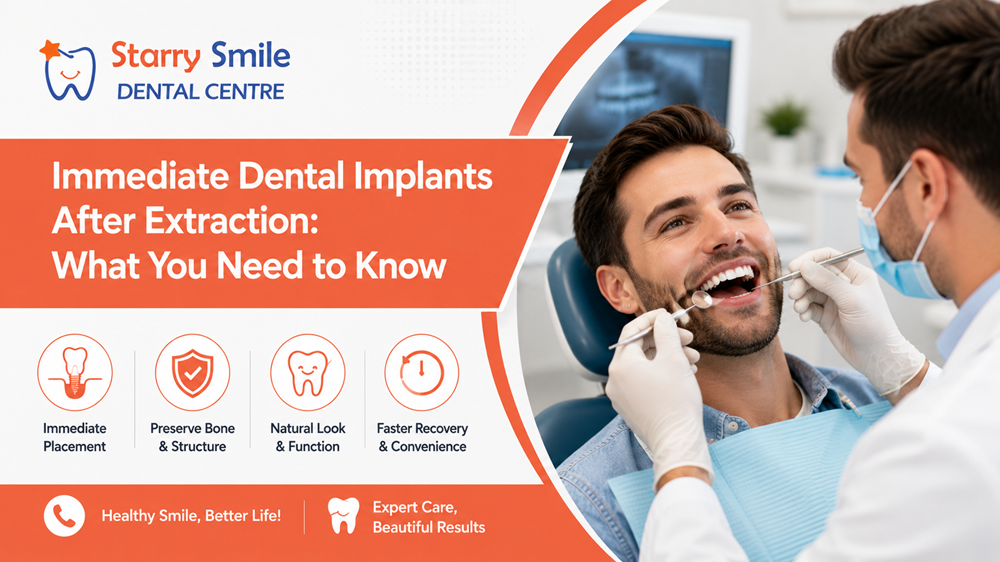
Losing a tooth. This will not always mean waiting several months. Before replacing it. In some cases. A dentist will remove the damaged tooth. Also place an implant into the socket. During the same appointment. Known as immediate dental implant placement. This can shorten treatment time. Also help preserve the natural shape of the gums.
But immediate placement will not suit every patient. Or every extraction site. The dentist should assess the bone. Gum condition. Bite and general health. Before recommending the procedure. So a detailed examination at Starry Smile Dental Clinic – Dubai. This plays an important role. In creating a safe and predictable treatment plan.
An immediate dental implant after extraction. This involves placing a titanium implant into the jawbone immediately. After removing a tooth. Instead of allowing the socket to heal first. The dentist will carefully position the implant. Within the available bone.
The patient will receive a temporary tooth on the same day in a few cases. However, same-day implant placement and same-day tooth loading are not exactly the same procedure. An implant will sit beneath the gum. Or support a temporary crown. Depending on its initial stability.
The final permanent crown will come later. After the implant has bonded firmly. With the jawbone. Ge details on Best Dental Clinic Near Business Bay.
Both techniques will provide excellent results. The right option will depend on the condition of the extraction site.
|
Treatment factor |
Immediate implant |
Delayed implant |
|
Implant placement |
Same day as extraction |
Usually after the socket heals |
|
Overall treatment period |
Often shorter |
Usually longer |
|
Number of surgical visits |
May require fewer visits |
Often needs separate procedures |
|
Bone condition required |
Strong, healthy supporting bone |
Allows time for bone and gum healing |
|
Infection concerns |
Requires careful case selection |
May suit sites with significant infection |
|
Temporary tooth |
Sometimes possible |
Usually provided through another method |
|
Bone grafting |
May still be necessary |
May also be required |
Although immediate treatment appears more convenient, speed should never replace proper diagnosis. A delayed implant will offer a safer solution. When the socket has extensive bone loss. Or uncontrolled infection.
A good candidate will have healthy gums. Adequate bone. Also no severe active infection. Around the tooth. The surrounding socket walls must remain reasonably intact. After extraction.
You may qualify when:
Smoking will reduce blood flow to the gums. Also delay healing. So patients who smoke. They must discuss the risks honestly with their dentist. Also consider stopping before treatment.
The dentist will examine the tooth and nearby structures. A dental X-ray. Or 3D CBCT scan will help measure bone height. Width and the position of nerves. Or sinus spaces.
The dentist numbs the area. Also remove the tooth as gently as possible. This careful extraction will help protect the surrounding bone. Also gum tissue. Then the socket gets cleaned. Also the dentist prepares a precise channel for the implant.
The implant will go into a stable bone beyond. Or around the extraction socket. When a small space remains between the implant and socket wall. The dentist will add bone-grafting material to support healing.
The dentist will place a healing cap. Close the gum. Or attach a temporary crown. But the temporary tooth will stay slightly out of the bite. So that chewing pressure will not disturb the implant. Get details on Teeth Whitening Treatment.
Few patients will receive a same-day temporary tooth. Particularly when the implant achieves strong initial stability. This option will help patients avoid a visible gap. Particularly after the removal of a front tooth.
But the temporary crown will serve an aesthetic purpose. During healing. Patients must not use it to bite hard foods. Biting apples. Nuts. Or crusty bread will place excessive force. On the new implant.
A temporary crown will not mean that healing has finished. The bone will need time to join with the implant. Through a process called osseointegration. This stage will take several weeks. Or months.
The treatment will offer practical and cosmetic advantages.
Because extraction and implant placement. This will happen during one appointment. Patients will avoid a separate implant surgery later. Likewise the overall treatment timeline will become shorter.
Natural tooth roots. This supports the surrounding bone. Once a tooth disappears. The jawbone will gradually shrink. Immediate implant placement will help support the socket. Also maintain the gum outline. Although it cannot completely prevent natural remodelling.
Combining procedures will reduce the number of surgical visits. Suitable patients will find the treatment more convenient.
Immediate placement will help maintain the soft-tissue shape. Around front teeth. So it will support a natural-looking final restoration. When planned correctly.
Like any surgical treatment. Dental implant surgery carries some risks. These will include infection. Bleeding. Swelling. Gum recession. Implant movement. Or failure to integrate with the bone.
The gum will shrink during healing. Also expose part of the implant restoration. This risk matters more. In the front of the mouth. Where even a small gum change will affect the smile.
An immediate implant will fail. When it lacks sufficient stability. Receives excessive bite pressure. Or develops infection. Careful planning. Skilled placement. Also good aftercare will lower many of these risks. Looking for a Dental Bonding Front Teeth Gap?
Bone grafting is common. During immediate implant placement. After a tooth comes out. The implant will rarely fill the socket completely. So the dentist will place graft material into the remaining gap.
The graft will support the socket. Also encourage new bone formation. But the need for grafting. This will depend on the socket shape. Bone thickness. Also implant position.
In cases with major bone loss. The dentist will recommend grafting first. Delaying the implant. Though this extends the treatment period. It will create a stronger foundation for the final tooth.
Mild swelling. Tenderness. Also small amounts of bleeding will occur during some days. Patients can control discomfort with the medicines. Recommended by their dentist.
During recovery:
Patients must contact the clinic. When pain becomes worse. Instead of gradually improving. Or when they notice persistent bleeding. Fever. Pus or movement around the implant.
Related Services:
» Tooth Extraction Dental Center
» Root Canal Treatment in Dubai
Healing times vary. In most cases. Osseointegration will take roughly three to six months. But bone quality. Implant location. Health conditions. Also daily habits will change the timeline.
Once healing reaches the required level. The dentist will take an impression. Or digital scan for the final crown. The dental laboratory will create a customised restoration. That matches the colour. Size and shape of nearby teeth.
Related Articles:
» Dental Implants: Everything You Need to Know
» Dental Implants: How Long Do They Actually Last?
» Dental Implants: Is This the Right Choice for Your Smile?
» Procedures and different kinds of Dental Implants
» Dental Implants in Dubai: Solution for Missing Teeth
An immediate implant can provide an efficient way to replace a failing tooth, but successful treatment depends on accurate diagnosis. The dental team at Starry Smile Dental Clinic – Dubai will evaluate the tooth. Bone. Gum line and bite. Before discussing suitable implant options.
Rather than choosing treatment only. Because it seems faster. Patients must focus on long-term stability. Comfort and appearance. With appropriate case selection. Also responsible aftercare. An immediate dental implant in Dubai will restore function and confidence. With some treatment stages.
No. The site will have enough healthy bones. To hold the implant firmly. Severe infection. Damaged socket walls. Or major bone loss. This will require delayed placement.
The dentist will use local anaesthesia. During the procedure. So patients must not feel sharp pain. Some tenderness and swelling. This will occur afterward.
Dentists provide a temporary crown first. The permanent crown. This will come after the implant has integrated with the jawbone.
The time will depend on the extraction. Implant position. Also need for bone grafting. Many appointments will take around one to two hours. For a single site.
They can offer a safe option. For carefully selected patients. But proper imaging. Sterile technique. Implant stability. Also follow-up care remains essential.
A minor and manageable infection. This will not always rule out immediate placement. But extensive infection. Or bone damage will make delayed treatment safer.
Studies report favourable outcomes in some cases. But results depend on bone quality. Oral hygiene. Implant stability. Smoking habits and clinical skill.
You will need a small graft to fill the space. Between the implant and socket wall. Larger grafts will become necessary. When the site has lost significant bone.
Choose soft foods. Like yoghurt. Eggs. Soup. Mashed vegetables and soft rice. Avoid hard and sticky foods. Crunchy and very hot foods. During early healing.
Smokers will receive implants. But they face a higher risk of delayed healing. Infection and implant failure. Stopping smoking will improve the treatment outlook.
Patients return to light work. Within one or two days. But those with physically demanding jobs. They will need a longer recovery period.
The cost will depend on the implant system. Tooth location. Scans. Grafting requirements. Temporary crown. Also final restoration. A clinical examination will provide an accurate estimate.
Comments are closed.


Dental Bonding for a Better Smile: Fix Chipped and Gapped Teeth
[…] » Immediate Dental Implants After Extraction […]