+971 4 584 1014
 +971 58 684 1014

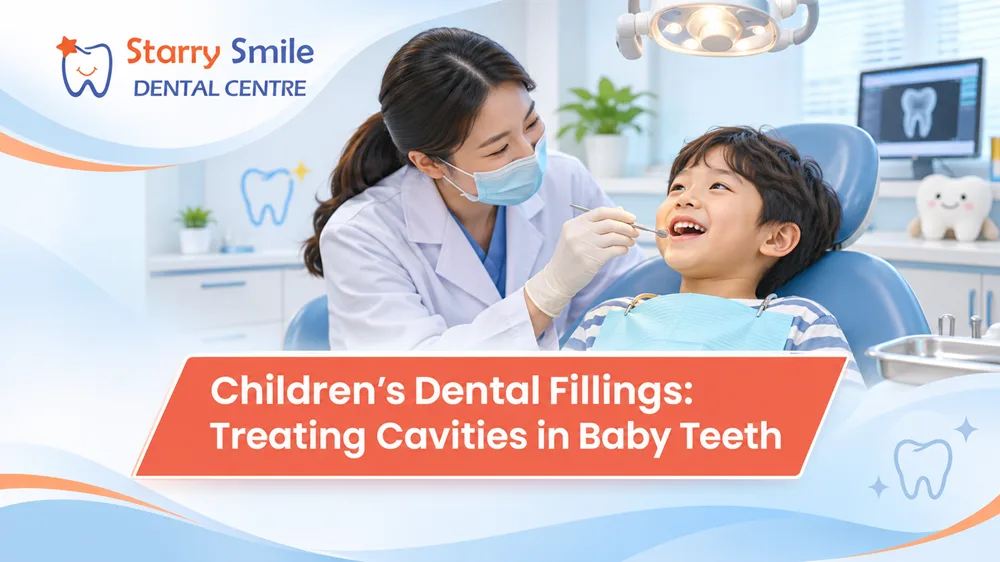
Parents sometimes wonder. If baby teeth will fall out anyway ? Do cavities really need treatment? The short answer is yes. Baby teeth will have an important job. They will help children chew food. Speak clearly. Smile confidently. Also maintain space for their permanent teeth.
When tooth decay will start in a primary tooth. This will become deeper over time. So treating the cavity early. A children’s dental filling will help protect the tooth. Reduce discomfort. Also prevent complicated dental problems.
At Starry Smile Dental Clinic – Dubai. Children’s dental care focuses on making treatment as comfortable. Also stress-free as possible. Early treatment means a simpler dental procedure. For both the child and parent.
A cavity develops. When bacteria in the mouth interact with sugars. Also produce acids. These acids will attack the tooth enamel. Because enamel on baby teeth is thin. Decay will sometimes progress faster. Than parents expect.
Several factors will increase the chance of tooth decay in children. This includes:
Some children will naturally have deeper grooves in their back teeth. Which will trap food and plaque easily. Get details on Wisdom Teeth Removal in Dubai.
Yes. In many situations they do. A baby tooth with decay. This must not simply be ignored. Because the tooth will remain in the mouth. For several years. Some primary molars will normally remain. Until a child reaches 10 to 12 years of age.
So untreated decay will have plenty of time. To become painful. A dental filling for baby teeth. This removes the decayed area. Also restore the damaged part of the tooth. So the child will continue eating. Also using the tooth normally.
But not every cavity will require the same treatment. A very early enamel lesion will sometimes be managed. Through preventive measures. When a dentist identifies it. Before a true cavity develops. The deeper decay will require a filling. Pulp treatment. Crown. Or in some situations. Extraction.
Children do not always complain when tooth decay begins. So regular dental examinations will remain important.
Parents must watch for symptoms like:
But a cavity will develop. Without obvious pain. Also routine paediatric dental check-ups in Dubai. This will help detect problems. Before discomfort begins.
Before starting treatment. The dentist examines the tooth. Also determines how deep the decay has become. Dental X-rays will be recommended. When necessary.
During a typical paediatric dental filling procedure. The dentist will keep the child comfortable. Local anaesthesia will be used to numb the tooth. Also surrounding area when needed.
Next, the damaged and decayed tooth structure is carefully removed. The area is cleaned. Then the dentist places a suitable filling material. Inside the prepared tooth. The filling is shaped. So that the child will bite comfortably. For a small cavity. The procedure will often be straightforward. Therefore, finding decay early can make the dental visit much easier. Looking for a Dental Clinic in Dubai.
Dentists will use different restorative materials. Depending on the tooth. Cavity location. Age of the child. Also clinical situations.
|
Filling Option |
Common Use |
Main Advantage |
Appearance |
|
Composite resin |
Front and back teeth |
Tooth-coloured and aesthetic |
Natural-looking |
|
Glass ionomer |
Selected small restorations |
Releases fluoride |
Tooth-coloured |
|
Stainless steel crown |
Heavily damaged baby molars |
Strong and durable coverage |
Metallic |
|
Temporary filling |
Short-term treatment |
Protects tooth until further care |
Varies |
A tooth-coloured filling for children. This is often preferred. When appearance matters. But the best option will depend. On how much healthy teeth remain. Also how much chewing pressure the tooth receives. The dentist must recommend the restoration. Based on the individual tooth. Rather than appearance alone.
Dental fillings are commonly used. To restore decayed primary teeth. A paediatric-focused dentist will select materials. Also treatment techniques. According to the child’s dental needs.
Treating an active cavity. This will often protect the child from problems. Associated with untreated decay. This includes increasing pain. Also infection. Parents will discuss filling materials. Anaesthesia. Allergies. Or any concerns. With the dentist. Before treatment.
Related Services:
» Orthodontic Treatment in Dubai
» Tooth Scaling and Root Planing
» Teeth Whitening Treatment in Dubai
A small cavity will not remain small forever.
Without appropriate care. Decay will continue. Through the tooth enamel. Also enter the deeper dentine layer. Bacteria will reach the pulp. Which contains nerves. Also blood vessels.
At this stage. The child will experience significant toothache.
Untreated decay may also lead to:
Additionally, losing a baby tooth too early can allow neighbouring teeth to move into the empty space. Consequently, this may affect the space available for the developing permanent tooth. Get details on Invisalign Treatment in Dubai.
The amount of remaining healthy tooth structure often helps determine whether a filling or crown works better.
|
Condition |
Filling May Be Suitable |
Crown May Be Recommended |
|
Small cavity |
Yes |
Usually unnecessary |
|
Moderate decay |
Often |
Sometimes |
|
Large cavity |
Less predictable |
Often preferred |
|
Tooth after pulp treatment |
Sometimes |
Frequently recommended |
|
Multiple damaged tooth surfaces |
Limited suitability |
Often more protective |
Therefore, parents should not worry if a dentist recommends something other than a simple filling. The aim is to choose a restoration. That can protect the tooth effectively. Until it naturally falls out.
Children will often take emotional cues. From their parents. So calm and positive language will make a noticeable difference. Instead of saying, “It won’t hurt,”. Simply explain that the dentist will clean. Also repair the tooth.
Also, avoid sharing frightening dental experiences in front of your child. Keep the explanation simple. Also age appropriate. For younger children. Scheduling appointments. When they are normally awake. Also resting will make the cooperation easier.
Related Article:
» Tooth Decay Treatment: Types and Benefits of Dental Fillings
» Dental Fillings: Types, Procedure and What to Expect
» How long do dental fillings last?
» How Dental Fillings Help Treat Cavities in Children
» Broken Filling or Crown: Temporary Fixes and Next Steps
A filling repairs existing damage. But it will not prevent new cavities elsewhere. For that reason. Parents must continue a consistent home-care routine.
Children must brush twice daily. With an age-appropriate amount of fluoride toothpaste. Parents must supervise. Or assist younger children. Because they will not have enough hand coordination. To clean every tooth properly.
Additionally:
Make dental care part of the child’s normal routine. Rather than something reserved. Only for toothache.
When a child develops tooth decay, early action can protect both comfort and dental health. Children’s dental fillings in Dubai can restore damaged baby teeth before a small cavity turns into a painful problem.
At Starry Smile Dental Clinic – Dubai. Our dental team will evaluate each child’s teeth carefully. Also recommends treatment. According to the location. Also depth of the cavity. The child’s age. The condition of the tooth.
When your child has a suspicious dark spot. Food getting trapped in a tooth. Sensitivity. Or an already diagnosed cavity. A dental assessment will help identify the right next step.
Early treatment is simpler. Healthy baby teeth will support comfortable eating. Clear speech. Proper spacing. Also a positive start to lifelong oral health.
Yes. Many cavities in baby teeth will require treatment. Baby teeth will remain for years. So untreated decay will cause pain. Infection and premature tooth loss.
There will be no single minimum age. The dentist will consider the child’s age. Cooperation. Cavity size. Tooth condition. Also expected time. Before the tooth naturally falls out.
Yes. Composite and other tooth-coloured restorative materials. This will be suitable. For selected primary teeth. The dentist will recommend. The best material for the individual cavity.
Dentists use techniques. To make treatment comfortable. Local anaesthesia will numb the area. When required. Though children will notice pressure. Or vibration during treatment.
Treatment time varies. According to the cavity. Tooth and child’s cooperation. Small and uncomplicated fillings will be completed quickly.
A true cavity or hole cannot rebuild itself. Very early enamel changes. This will sometimes be managed preventively. Which is why early dental examination will matter.
Decay will spread deeper. Also cause sensitivity. Toothache. Infection. An abscess. Or premature tooth loss.
Baby teeth will support chewing. Speech. Facial development. Also spacing for permanent teeth. Some baby teeth will remain in the mouth. Until the early teenage years.
Yes. Though parents must follow the dentist’s instructions. When local anaesthetic is used. The child will need to wait. Until numbness reduces. To avoid biting the cheek or lip.
Yes. New decay will occur. Around a restoration. When plaque collects in the area. Good brushing. Dietary habits. Also regular dental reviews. This will remain essential.
When a tooth can be predictably restored. Preserving it will often be useful. However, badly infected or severely damaged teeth may require other treatment. The dentist will assess the individual situation.
The appropriate recall schedule. This will depend on the child’s cavity risk. Also oral health. Many children benefit from regular preventive dental reviews, while cavity-prone children may require more frequent monitoring.