+971 4 584 1014
 +971 58 684 1014
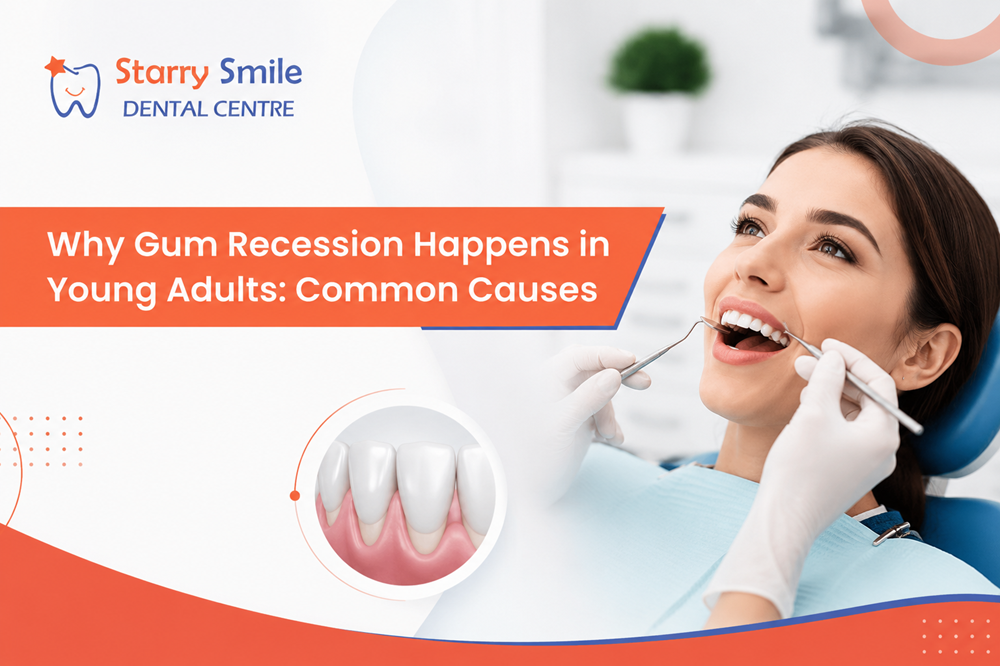
A gum recession will sound like a problem. That only affects older people. But dentists regularly see receding gums in young adults. This includes patients in their late teens. Twenties and early thirties. The condition develops. When gum tissue moves away from a tooth. Exposing more of its surface or root.
The change will seem cosmetic. One tooth can look longer than the others. Exposed roots will gradually cause sensitivity. Uneven gums. Root decay. Also discomfort while brushing. So recognising the problem early. This will protect your smile. Also long term oral health.
At Starry Smile Dental Clinic Dubai. We assess the gumline. Brushing habits. Bite. Dental alignment. Also plaque levels. Before recommending treatment. As recession has several possible causes. Guessing the reason rarely solves it.
Healthy gums will fit firmly around each tooth. When recession begins. The gum margin shifts downwards or upwards. Depending on the tooth’s position. So the root surface will become visible.
Common gum recession symptoms include:
Gum recession will affect one tooth. Several teeth. Or the entire mouth. It can progress without strong pain. Regular dental examinations remain important because a dentist may identify early changes before you notice them. Get details on Wisdom Teeth Removal.
Many young adults assume. That firm brushing cleans teeth effectively. But aggressive brushing will irritate the gum margin. Also gradually wear away delicate tissue.
A hard bristled toothbrush will damage gums. Also tooth enamel. Particularly when someone uses a side-to-side scrubbing action. More pressure does not mean cleaner teeth. But gentle circular movements will remove plaque safely.
Using an electric toothbrush with a pressure sensor will help. But correct technique still matters.
Plaque forms continuously around teeth. Also along the gumline. When it stays there. Bacteria will irritate the gums. Also trigger inflammation. Initially. this condition will appear as gingivitis. Which often causes redness. Swelling. Bleeding. Or bad breath.
When inflammation continues. The tissues supporting the teeth will suffer damage. The gums will pull away. Also form deeper spaces. Around the teeth.
Young age. This does not provide complete protection from gum disease. Irregular brushing. Rushed flossing. Smoking. Stress. Also missed dental cleanings will increase the risk.
Some people inherit a thin gum type. Their teeth will look healthy. Yet the tissue covering the roots. This provides less protection against friction. Inflammation. Or tooth movement.
Even normal brushing pressure. This will affect a person with delicate gums. More than someone with thicker tissue. A dental assessment will identify a thin gum biotype. Also help the patient follow a safer prevention plan. Looking for a Teeth Whitening Treatment?
A tooth that sits outside the ideal jawbone position. This will have only a thin layer of gum covering it. So crowded and rotated. Or protruding teeth will face a higher chance of localised recession.
Overlapping teeth will often trap plaque. Also make flossing difficult. Correcting dental alignment will improve cleaning access. But orthodontic planning can consider bone support and gum thickness.
Grinding or clenching. This places repeated pressure on teeth. Also their supporting structures. Though grinding will not always cause recession by itself. Excessive bite forces will worsen an existing weak area.
Young adults grind their teeth during sleep. Because of stress. Disrupted sleep. Or an uneven bite. Signs will include morning jaw tightness. Flattened teeth. Headaches. Also chipped enamel. So a dentist will recommend a custom night guard. After examining the bite.
Smoking affects blood flow. Also the body’s ability to maintain healthy gum tissue. This will hide early bleeding. Making gum problems less obvious.
Vaping exposes oral tissues to heat. Chemicals and dryness. Research continues to examine its complete long term impact. But vaping must not be considered harmless for the gums. Quitting tobacco and nicotine products. This supports better healing. Also oral health.
Jewellery that repeatedly rubs against the gumline. This can cause local injury. A lower-lip piercing will contact the gums behind the front teeth. Every time a person speaks or eats.
This friction will produce a narrow recession defect. Removing or repositioning the jewellery. This will reduce further irritation. Although lost tissue will still require professional treatment.
Hormonal fluctuations during puberty. Pregnancy. Or certain menstrual stages will make gums reactive to plaque. Some young adults notice swelling or bleeding. Even when plaque levels seem moderate.
Hormones will not directly explain every case of recession. They will increase inflammation. When oral hygiene needs improvement. Get details on Root Canal Treatment for Children.
Snapping floss forcefully into the gums. This will repeatedly injure the tissue. Using toothpicks. Whitening tools. Or sharp objects around the gumline. This will cause damage.
Floss must slide gently between the teeth. Also curve around each tooth. Interdental brushes must fit comfortably. Rather than being pushed through tight spaces.
Related Services:
» Root Canal Treatment in Dubai
|
Possible cause |
Common clue |
Helpful next step |
|
Aggressive brushing |
Recession near prominent teeth |
Use a soft brush and lighter pressure |
|
Plaque and gum disease |
Bleeding, swelling, bad breath |
Book professional cleaning and gum assessment |
|
Thin gum tissue |
Long-looking teeth with little inflammation |
Monitor closely and discuss protective treatment |
|
Crowded teeth |
Recession around one rotated tooth |
Consider orthodontic and periodontal evaluation |
|
Grinding or clenching |
Jaw pain and worn tooth edges |
Arrange a bite check or night-guard assessment |
|
Smoking or vaping |
Dry mouth and slow gum healing |
Seek support to stop nicotine use |
|
Oral piercings |
Recession beside the jewellery |
Remove the source of repeated friction |
Gum tissue does not return to its original position. Without treatment once it has receded. But early care will often stop. Or slow further loss.
Treatment will depend on the cause. Your dentist will recommend professional cleaning. Improved brushing. Sensitivity treatment. Bite management. Orthodontic advice. Or periodontal care. In more advanced cases, gum graft treatment may cover an exposed root and strengthen the area.
Therefore, the best treatment does not simply cover the visible problem. It will remove or control the factor that caused it.
Related Articles:
» Orthodontic Treatment Helps Keep Your Gums Healthy
» How to Prevent Gum Recession
» Gum Infection (Abscess): Signs, Causes and Steps
» Gum Pigmentation Treatment: Laser vs. Surgical Options
» Orthodontic Options for Adults
Use a soft-bristled toothbrush. Also brush gently for two minutes. Twice daily. Clean between your teeth every day with floss. Or correctly sized interdental brushes.
Replace worn toothbrush heads. Because bent bristles will scrape the gumline. Attend regular dental examinations. Also hygiene appointments based on your dentist’s advice.
Avoid smoking and vaping. Manage teeth grinding. Do not ignore bleeding gums. Arrange an assessment when one tooth looks longer. Or becomes sensitive. Read on Dental Implants in Dubai.
Book a dental appointment. When you notice visible root exposure. Persistent sensitivity. Bleeding gums. Swelling. Bad breath. Loose teeth. Or a changing bite.
Early recession may need only small changes in home care. However, waiting can allow the defect to deepen. A professional examination at Starry Smile Dental Clinic Dubai. This will identify the cause. Also create a personalised plan. To protect your gums.
Yes. Young adults will develop recession. Because of aggressive brushing. Gum inflammation. Thin tissue. Crowded teeth. Grinding. Smoking. Or piercings.
The cause will involve brushing pressure. Plaque. Tooth position. Genetics. Bite forces. Or lifestyle habits. A dental examination will determine which factor affects you.
Yes. Repeated aggressive brushing. This will wear away gum tissue. Also expose tooth roots. Switching to gentle brushing. This will reduce further damage.
No. Gum disease represents one cause. But thin gums. Misaligned teeth. Piercings. Also traumatic brushing will also cause recession.
Stress will contribute indirectly. By increasing grinding. Reducing oral care consistency. Or affecting inflammation. But a dentist must check for other causes too.
Lost gum tissue will not fully regrow. Early treatment will prevent progression. Also protect the exposed area.
Orthodontic movement will increase risk. When teeth move outside the supporting bone. Or when gums remain inflamed. Careful planning. Also good hygiene reduces this risk.
Yes. When used correctly. Choose a soft head. Avoid scrubbing. Also consider a model with a pressure warning.
Vaping will contribute to dryness. Also gum irritation. So stopping vaping will support healthier oral tissues. Also better healing.
A desensitising fluoride toothpaste. This will reduce sensitivity. Also strengthen vulnerable root surfaces. Ask your dentist which formulation will suit your condition.
Surgery will become necessary. When recession progresses. Roots remain highly sensitive. Tissue becomes too thin. Or the defect threatens tooth support.
A general dentist will complete the first assessment. But a complex or advanced recession. This requires care from a periodontist who specialises in gums. Also supporting tissues.