+971 4 584 1014
 +971 58 684 1014
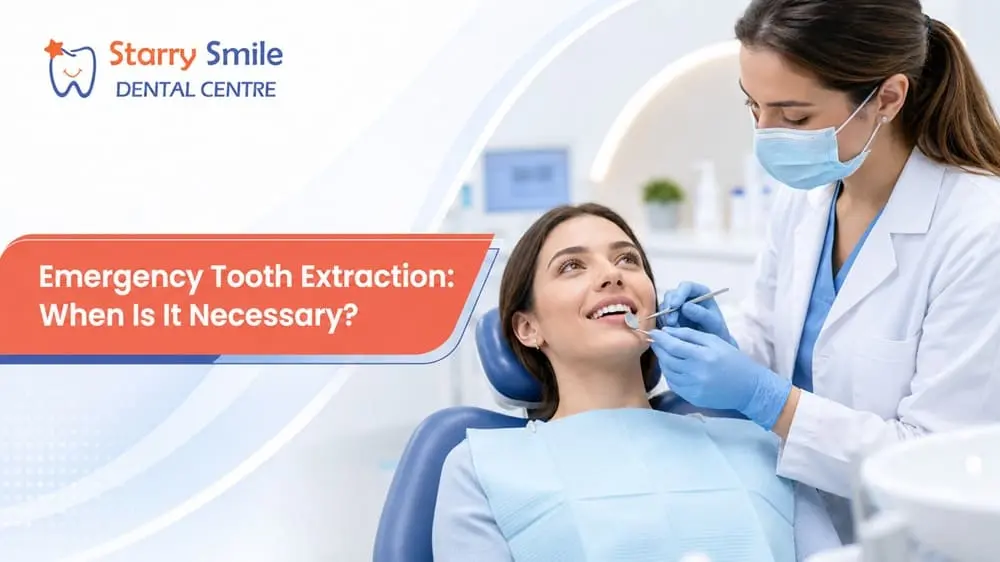
A sudden toothache will interrupt sleep and work. Meals. Also almost everything in between. But not every painful tooth will need immediate removal. In many cases. A dentist will save it with a filling. Crown. Root canal treatment. Or another restorative procedure. But certain dental problems will become too severe to delay. In those situations. An emergency tooth extraction will offer the safest way to control pain. Stop infection. Also protect nearby teeth.
At Starry Smile Dental Clinic – Dubai. The dentist first examines the affected area. Check your symptoms. Also may take a dental X-ray. So extraction is usually recommended. Only when keeping the tooth will create a greater risk than removing it.
An emergency dental extraction will involve removing a badly damaged and infected. Or dangerous teeth. Without waiting for a routine appointment. The procedure will happen on the same day. Or as soon as medically suitable.
Unlike a planned extraction. An emergency removal will follow severe symptoms. Such as unbearable pain. Facial swelling. Uncontrolled bleeding. Trauma. Or a spreading dental infection. The dentist must review your health history. Before starting treatment. Blood-thinning medicines. Uncontrolled diabetes. Pregnancy. Heart conditions. Or allergies will affect the treatment plan. Looking for a Dental Clinic in Dubai?
Tooth decay will begin as a small cavity. But when bacteria travel deep inside the tooth. They will destroy a large part of its structure. A filling will no longer hold. Also there may not be enough healthy tooth left for a crown.
Sometimes. Root canal treatment will save the tooth. When decay extends far below the gum line. Or the roots have become badly damaged. Urgent tooth removal will become necessary.
A dental abscess will form. When bacteria create a pocket of pus around the tooth. Or gum. Common signs will include intense throbbing pain. Swelling. A bad taste. Fever and tenderness while chewing.
Dentists can often drain the abscess. Also treat the tooth with root canal therapy. But when the tooth cannot be restored. Removing it helps eliminate the main source of infection. Extraction will reduce the chance of bacteria spreading into the jaw and face. Neck or bloodstream.
A swollen face. Difficulty breathing. Or trouble swallowing will require immediate medical attention.
A small chip will not need extraction. A tooth that splits vertically. Or breaks deep below the gum will be impossible to rebuild.
A serious fall. Road accident. Sports injury. Or biting on a hard object. This will fracture the crown and root. When the crack extends through the root. Bacteria will repeatedly enter the area. So the dentist may recommend emergency extraction for a broken tooth.
Gum disease will not only affect the gums. Over time. It can destroy the bone and tissues. That support the teeth. An affected tooth will become extremely loose. Painful. Also difficult to use.
If periodontal treatment cannot stabilise the tooth. Extraction will prevent further discomfort. Also make it easier to treat the surrounding gums. Removing a hopeless tooth will support future replacement options. Like a bridge. Denture. Or dental implant.
Wisdom teeth sometimes grow at an angle. Remain trapped below the gum. Or press against nearby teeth. Food and bacteria will collect around a partly erupted wisdom tooth.
So an emergency wisdom tooth extraction will be required. When the patient develops repeated infection. Severe swelling. Jaw stiffness. Gum pain. Or damage to the neighbouring molar.
Dental trauma will loosen a tooth. Or push it out of position. Dentists will usually try to reposition. Also stabilise permanent teeth. Whenever possible. A tooth with a severely fractured root. Damaged socket. Or poor blood supply will not survive.
Immediate extraction will remove unstable fragments. Also prepare the area for later restoration. Looking for a Orthodontic Treatment in Dubai?
Contact an emergency dentist in Dubai when you notice:
Though painkillers will offer temporary relief. They do not repair the cause. So delaying treatment will allow the problem to become complicated.
|
Dental condition |
Possible tooth-saving treatment |
When extraction may be needed |
|
Deep cavity |
Filling, crown or root canal |
Too little healthy tooth remains |
|
Dental abscess |
Drainage and root canal |
Infection surrounds a non-restorable tooth |
|
Cracked tooth |
Crown or bonding |
Crack extends through the root |
|
Loose tooth |
Gum therapy and splinting |
Severe bone support has been lost |
|
Wisdom tooth pain |
Cleaning and medication |
Repeated infection or impaction occurs |
|
Dental trauma |
Repositioning and splinting |
Root or socket damage is extensive |
The dentist will consider tooth preservation first. But the final decision will depend on the tooth’s condition. Infection level. Bone support. Long-term outlook. Also the patient’s overall health.
The dentist will examine the tooth. Also reviews your medical history. An X-ray will show the roots. Surrounding bone. Hidden infection. Or fracture pattern.
The dentist will numb the area with local anaesthesia. For a simple extraction. The tooth is gently loosened and removed. But a surgical extraction will require a small gum opening. Or division of the tooth into sections.
After removal. The dentist cleans the socket. Also controls bleeding. Stitches are placed. You will receive clear tooth extraction aftercare instructions. Before leaving the clinic.
Related Services:
» Invisalign Treatment in Dubai
» Root Canal Treatment in Dubai
» Teeth Whitening Treatment in Dubai
For the first 24 hours, bite gently on the gauze provided by the dentist. Avoid forceful rinsing. Smoking. Drinking through a straw. Also touching the socket with your fingers. Or tongue.
Choose soft foods. Such as yoghurt. Soup at a lukewarm temperature. Mashed vegetables. Eggs and soft rice. Avoid sharp and spicy. Very hot. Or crunchy foods.
A little swelling and discomfort will occur. But worsening pain. Heavy bleeding. Fever. Pus. Or a bad smell will signal a complication. Contact your dentist promptly. When these symptoms appear.
Waiting can seem easier. When pain comes and goes. But infected or fractured teeth will rarely heal on their own. Infection will damage nearby teeth. Reduce jawbone quality. Also cause more swelling.
Early assessment may even save the tooth. Therefore, visiting a dentist quickly gives you more treatment choices. Where extraction is unavoidable, prompt care can also make the procedure simpler and recovery more comfortable.
Related Articles:
» How to Prepare for Your Wisdom Tooth Extraction?
» Root Canal vs Extraction: Best Choice for Long-Term Health
» Tooth Extraction Aftercare: Clot Care, Pain Control, and Diet
» How Orthodontic Treatment Helps Keep Your Gums Healthy?
» When Do You Need Dental Treatment?
Severe dental pain deserves careful attention, not guesswork. At Starry Smile Dental Clinic – Dubai, patients can receive an examination, digital imaging, pain management, and a treatment plan based on the condition of the tooth.
An emergency tooth extraction in Dubai will not be the first option. But the dental team will evaluate. Whether the tooth can be safely restored. When removal becomes necessary. The goal is to control infection. Reduce pain. Also protect your oral health.
You will need urgent extraction. When the tooth is severely broken. Infected. Extremely loose. Or impossible to restore. But only a dental examination and X-ray will confirm the right treatment.
Yes. A dentist will often remove an infected tooth. After evaluating the swelling. Medical history. Also anaesthetic safety. In some cases. Severe swelling will require infection control. Before extraction.
The dentist will use local anaesthesia. To numb the area. You can feel pressure. Or movement. But you must not feel sharp pain. During the procedure.
Antibiotics will control bacterial spread. But they may not rebuild a badly damaged tooth. Extraction or root canal treatment will still be required.
Some broken teeth will be restored with bonding. A crown. Or root canal treatment. But a fracture extending deep into the root. This will make extraction necessary.
The infection will spread into nearby tissues. The jaw. Or other areas of the body. So a dental abscess will need urgent professional care.
A simple extraction will take only a short time. While a surgical. Or impacted tooth removal will take longer. The exact duration will depend on root shape. Tooth position. Also infection.
Many patients can rest for the remainder of the day. But people with physically demanding jobs will need additional recovery time.
You may usually eat soft food. Once the numbness starts to fade. Avoid chewing near the extraction site. Also stay away from very hot food.
Apply a cold pack to the outside of the face. For short intervals. During the first day. Take prescribed. Or recommended medicines exactly as directed.
Replacement timing will depend on healing. Bone condition. Infection and the chosen treatment. Your dentist can discuss an implant. Bridge. Or denture after the extraction site recovers.
No. Root canal therapy. Fillings. Crowns. Gum treatment. Or trauma stabilisation will save the tooth. Extraction is used. When predictable repair will be no longer possible.