 +971 4 584 1014
 +971 58 684 1014
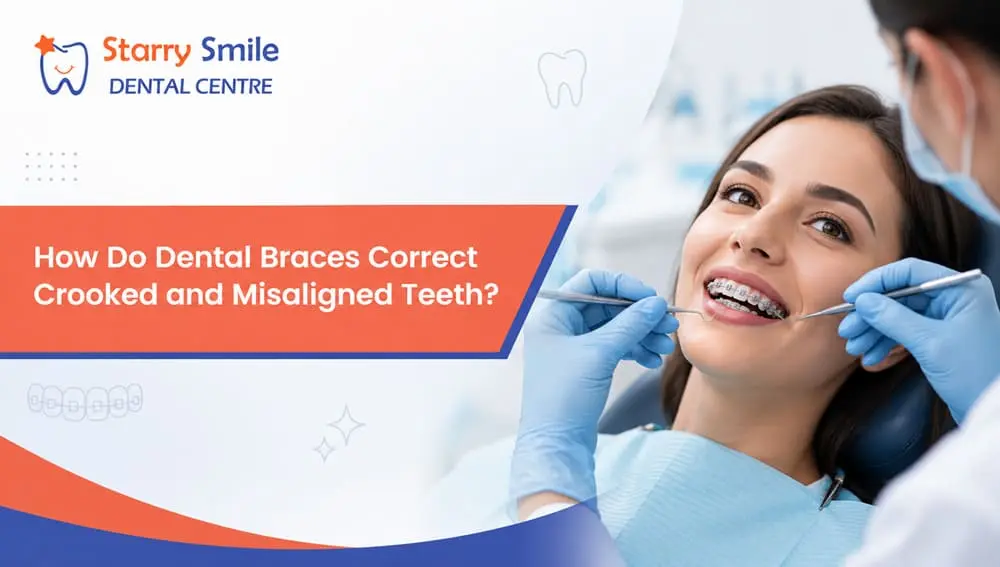
Crooked teeth will affect much more than the appearance of your smile. They will create tight spaces. Where food gets trapped. Make brushing difficult. Also change the way your upper and lower teeth meet. Dental braces will gradually guide misaligned teeth into healthier positions.
Braces will not move teeth overnight. But they will apply controlled and continuous pressure over several months. This pressure will encourage the bone and tissues. Around each tooth to adapt. Allowing the tooth to shift safely. So braces can improve tooth alignment. Correct certain bite problems. Also create a more balanced smile.
At Starry Smile Dental Clinic in Dubai. Every orthodontic treatment will begin with a detailed assessment. No two smiles will need exactly the same correction.
Some people will inherit a small jaw. Large teeth or spacing problems from their family. But several childhood habits and dental conditions can also affect alignment.
Common causes will include:
A tooth can erupt at an angle. When there is not enough room in the jaw. So early dental assessments will help identify developing orthodontic concerns. Before they become more complex. Looking for a Dental Clinic in Dubai?
Orthodontic braces will use a combination of brackets and wires. Also gentle force. The brackets will attach to the teeth. While an archwire will connect them. During treatment. The orthodontist adjusts. Or replaces the wire to guide specific teeth in the required direction.
When pressure acts on a tooth. The surrounding bone responds through a natural process called bone remodelling. Bone will gradually break down on the side. Toward which the tooth moves. Meanwhile, new bone forms behind the moving tooth. This biological process allows teeth to change position without becoming loose under professionally supervised treatment.
|
Brace component |
Main purpose |
|
Brackets |
Hold the archwire against each tooth |
|
Archwire |
Applies pressure and guides tooth movement |
|
Elastic ligatures |
Secure the wire inside the brackets |
|
Bands |
Provide additional support around back teeth |
|
Elastic bands |
Help correct the relationship between the jaws |
|
Springs or coils |
Create or close spaces between teeth |
Although the system looks simple, each adjustment follows a carefully planned sequence. Moving teeth too quickly may damage their supporting tissues. Therefore, regular orthodontic appointments matter.
Braces will correct many forms of crooked and misaligned teeth. This includes:
Crowding will happen. When the jaw lacks enough space for every tooth. The teeth may overlap. Twist. Or erupt outside the normal dental arch. Braces can create better alignment by opening, redistributing or carefully managing available space.
Some people have unwanted spaces because of small teeth, missing teeth or differences between jaw and tooth size. Braces will gradually pull selected teeth closer together. It will create more even spacing.
An overbite will occur. When the upper front teeth will overlap the lower teeth too much. Depending on the cause. Braces and orthodontic elastics will help improve the bite.
With an underbite, the lower front teeth sit ahead of the upper teeth. Mild or moderate cases may respond to orthodontic appliances. But severe jaw-related cases will require combined orthodontic and surgical care.
A crossbite will develop. When one or more upper teeth bite inside the lower teeth. Early correction will reduce uneven tooth wear. Also improve jaw function.
In an open bite. The upper and lower front teeth will not touch when the mouth closes. Braces can reposition the affected teeth. Although treatment will depend on habits. Tongue position and jaw development.
Orthodontic treatment will aim to produce a healthy bite. Where opposing teeth meet correctly. Not simply a straighter-looking smile. Looking for a Orthodontic Treatment in Dubai?
Different patients will have different clinical needs. Budgets and appearance preferences. So your dentist or orthodontist will recommend an option. After examining your teeth and bite.
|
Treatment option |
Appearance |
Suitable for |
Important consideration |
|
Metal braces |
Clearly visible |
Mild to complex alignment problems |
Strong and highly versatile |
|
Ceramic braces |
Tooth-coloured or clear |
Patients wanting less-visible fixed braces |
May require extra care |
|
Self-ligating braces |
Metal or ceramic |
Various alignment and bite concerns |
Use built-in clips instead of elastic ties |
|
Clear aligners |
Nearly invisible |
Selected mild to moderate cases |
Must be worn as instructed |
|
Lingual braces |
Hidden behind teeth |
Selected cosmetic cases |
Adjustment and cleaning may feel harder |
Fixed metal and ceramic braces will follow a similar principle. Brackets remain attached to the teeth. Also wires apply the required force. But the best option will depend on the complexity of the problem. Rather than appearance alone.
The dental team will examine your teeth and gums. Jaw relationship and facial profile. Digital scans. Photographs. Or X-rays will also help with treatment planning.
The teeth will receive a thorough cleaning. Before the brackets are bonded. The orthodontist will then place the archwire and secure it. The fitting procedure can feel unfamiliar. But it must not involve drilling into healthy tooth structure.
After placement. Mild tenderness will develop for a few days. Soft foods like soup and yoghurt. Pasta and mashed vegetables will make eating more comfortable.
Adjustment visits will usually continue throughout treatment. At each appointment. The orthodontist checks progress. Also changes the wire and elastics. Or other components when required. Treatment length will vary. Because simple spacing will move faster. Than severe crowding or a complicated bite. Get details on Clear Braces.
Many fixed-brace treatments will take around one to two years. Although some cases will finish sooner. Also complex corrections may take longer. The exact timeline will depend on:
Therefore, another person’s treatment period cannot predict your own. A personalised examination gives a more useful estimate.
Related Services:
» Root Canal Treatment in Dubai
» Teeth Whitening Treatment In Dubai
» Wisdom Teeth Removal in Dubai
Food and plaque can collect around brackets quite easily. Patients must clean their teeth carefully. To reduce the risk of cavities. Gum inflammation and white marks.
Brush after meals whenever possible. Also clean around every bracket. Use interdental brushes. Or orthodontic floss to reach beneath the wire. Limit sticky sweets. Chewing gum. Hard nuts and ice. Because they can bend wires. Or loosen brackets.
Good oral hygiene will remain essential. Throughout orthodontic treatment. Since plaque around braces will increase the risk of tooth decay. Also gum problems.
Related Articles:
» Clear Aligners vs. Braces: Which Orthodontic Option Is Right for You?
» Recovery After Wisdom Teeth Removal: Tips for a Faster Healing
» Teeth Whitening Care: Essential Tips for a Brighter, Healthier Smile
» Root Canal Treatment? Warning Signs You Shouldn’t Ignore
» Implant Maintenance: Hygiene Tips for Long-Term Success
Removing braces will not mean the treatment has completely finished. Teeth will naturally try to shift. Toward their previous positions. Especially during the first months after active treatment.
A dental retainer will hold the teeth. While the surrounding bone and gums stabilise. Depending on the case. The orthodontist will recommend a removable retainer. A fixed wire behind the teeth. Or both. Wearing it exactly as advised will help protect the final result.
Braces will straighten crowded teeth. Close gaps. Also improves how the upper and lower teeth meet. Proper alignment will make everyday cleaning easier. Also support a healthier bite.
At Starry Smile Dental Clinic – Dubai. Our dental team will evaluate each patient carefully. Before recommending orthodontic treatment. Whether you are exploring braces for your child. Teenagers or yourself. A professional consultation will clarify the most suitable next step.
Book an appointment. To learn how braces treatment in Dubai can improve your smile. Also dental alignment.
Braces may create long-lasting alignment. But teeth may shift after treatment. So patients must wear their retainers as instructed.
Placing braces usually does not hurt. Mild pressure. Or tenderness will develop after fitting. Also adjustments. It will commonly settle within a few days.
Many patients will begin treatment. During their teenage years. But children and adults will also benefit. The right age will depend on dental development. Also the type of orthodontic problem.
Yes. Adults will receive metal braces. Ceramic braces. Or clear aligners. Depending on their oral health and treatment needs.
Tooth movement will begin gradually. After pressure is applied. But visible changes can take several weeks or months.
Braces can improve many dental overbites. Orthodontic elastics. Or other appliances will help correct the bite relationship.
Braces mainly reposition teeth. Correcting a bite will create subtle changes in the lips. Smile and facial balance. Major skeletal changes will require other treatment.
Traditional braces will usually cause little change in speech. But some patients will need a brief adjustment period. Particularly with appliances placed near the tongue.
You can eat a varied diet. Although you should avoid very hard and sticky foods. Also chewy foods. Cutting firm foods into small pieces will protect the brackets.
Contact your dental clinic for advice. Avoid pulling the bracket or wire. Orthodontic wax will cover a sharp area. Until your appointment.
Appointment schedules will vary. According to the treatment plan. Patients will attend periodic reviews. So the orthodontist can monitor movement. Also make necessary adjustments.
Neither option can suit everyone. Braces can manage a wide range of complex movements, while clear aligners offer a removable and discreet choice for selected cases. A dental assessment will determine the more appropriate option.
Comments are closed.


Braces vs Clear Aligners: Which Treatment Is Right for You?
[…] » How Do Dental Braces Correct Crooked and Misaligned Teeth? […]