 +971 4 584 1014
 +971 58 684 1014
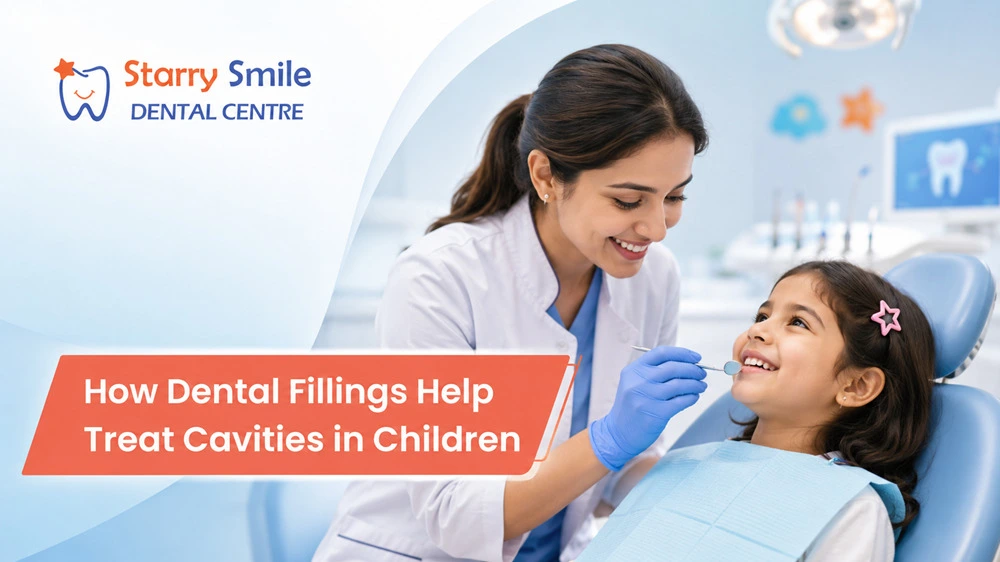
A small cavity will not look like a serious problem. Especially when it affects a baby tooth. But tooth decay will not usually stop on its own. It can slowly grow deeper. Cause pain. Eventually reach the sensitive inner part of the tooth.
Dental fillings for children may repair many cavities. Before they become more complicated. During the treatment. The dentist removes the damaged area. Also fills the space with a suitable restorative material. So the tooth becomes stronger. More comfortable. Also better protected from further damage.
At Starry Smile Dental Clinic – Dubai. Our dental team will aim to make cavity treatment calm. Also child-friendly. We will explain every step in simple words. So both children and parents know what to expect.
A cavity will develop. When bacteria in the mouth use sugar from food. Also drinks to produce acids. These acids will repeatedly attack the tooth enamel. Over time. The enamel weakens. Also a hole may form.
Several everyday habits will increase a child’s cavity risk. This includes:
Some children have deeper grooves in their back teeth. Which can hold food and plaque. Others will have weaker enamel. Or a higher individual risk of decay. Looking for a Dental Clinic in Dubai?
Parents sometimes ask. “Why fill a baby tooth when it will fall out anyway?” The answer will be simple. Baby teeth have important jobs. Until the permanent teeth are ready to erupt.
Healthy primary teeth will help children chew. Speak and smile comfortably. Moreover, they maintain space for developing adult teeth. When decay damages a baby tooth. The child will experience sensitivity. Disturbed sleep. Difficulty eating. Or dental infection.
Untreated decay will progress quickly. Because baby teeth have relatively thin enamel. Also the nerve lies closer to the tooth surface. Therefore, early cavity treatment for kids may prevent the need for more complex procedures.
The American Academy of Pediatric Dentistry. This will recommend restorative care. When appropriate as part of personalised cavity management for children.
A filling will do more than cover a visible hole. The dentist will examine the tooth. Also assess how far the decay has spread. Dental X-rays will be recommended. When the affected area is hidden between teeth. Or below the surface.
The dentist can gently remove the decayed tooth structure. Once the area is clean. The dentist places the filling material. Also shapes it to match the natural bite. The restoration is polished and checked.
By sealing the repaired area. The filling will help stop food and bacteria from entering the cavity. White fillings will treat small holes. By replacing the decayed section. Also protecting the remaining tooth structure. Looking for a Pediatric Dentist in Dubai?
Every appointment will depend on the child’s age. Comfort level and treatment needs. A typical visit will include the following steps:
A child-friendly communication will make a big difference. A dentist will use simple explanations. Demonstrations. Also praise to help the child feel safe. Rather than overwhelmed.
The best filling will depend on the tooth. Cavity size. Moisture control. Also how long the restoration needs to last.
|
Filling material |
Appearance |
Common advantage |
Important consideration |
|
Composite resin |
Tooth-coloured |
Blends naturally with the tooth |
Needs good moisture control |
|
Glass ionomer |
Tooth-coloured or pale |
Releases fluoride and bonds to the tooth |
May wear faster in heavy chewing areas |
|
Resin-modified glass ionomer |
Tooth-coloured |
Offers fluoride release with improved strength |
Suitability depends on the cavity |
|
Dental amalgam |
Silver-coloured |
Strong and durable |
Does not match the natural tooth colour |
|
Temporary filling |
Varies |
Protects the tooth until final treatment |
Not designed as a permanent solution |
Composite fillings for children are popular. Because they closely match the colour of natural teeth. But they require the tooth to remain clean. Also dry while the dentist places them.
In some cases. A dentist will recommend an interim therapeutic restoration. This approach will help manage decay in very young children. Children who find treatment difficult. Or those who need gradual care. Get details on Root Canal Treatment for Children in Dubai.
Cavities will not always cause pain at the beginning. Regular dental visits will remain important. Even when a child has no obvious symptoms.
Possible warning signs will include:
If swelling and severe pain. Or a fever develops. Parents must arrange prompt professional assessment. A simple filling will not be enough. Once decay reaches the pulp. Or causes an infection.
Related Services:
» Orthodontics Treatment for Children
» Teeth Whitening Treatment In Dubai
» Invisalign Treatment in Dubai
Early treatment will help preserve more of the natural tooth. A smaller cavity will often require a simpler restoration. Than a deeply damaged tooth.
A well-placed filling may:
But fillings do not make teeth immune to future decay. Children will still need good brushing. Sensible eating habits. Also regular dental reviews.
Related Article:
» Tooth Cavity Symptoms and Early Treatment Options
» Warning Signs of Gum Disease: When to See a Dentist
» Teeth Whitening Aftercare: Do’s and Don’ts for Long-Lasting Results
» Why Do Teeth Crack? Common Reasons You Shouldn’t Ignore
» Immediate Dental Implants After Extraction
After treatment. The mouth will remain numb for a short period. So parents must prevent the child from biting the cheek. Lip or tongue. It will also help to avoid hard foods. Until the numb feeling disappears.
Mild sensitivity will occur briefly. Particularly with cold drinks. Or chewing. Parents must contact the dentist. When discomfort becomes severe. Lasts for several days. Or the filling feels too high.
To protect both filled and healthy teeth:
Children with previous cavities will need a personalised prevention plan. Because a history of early childhood decay will increase the likelihood of future cavities.
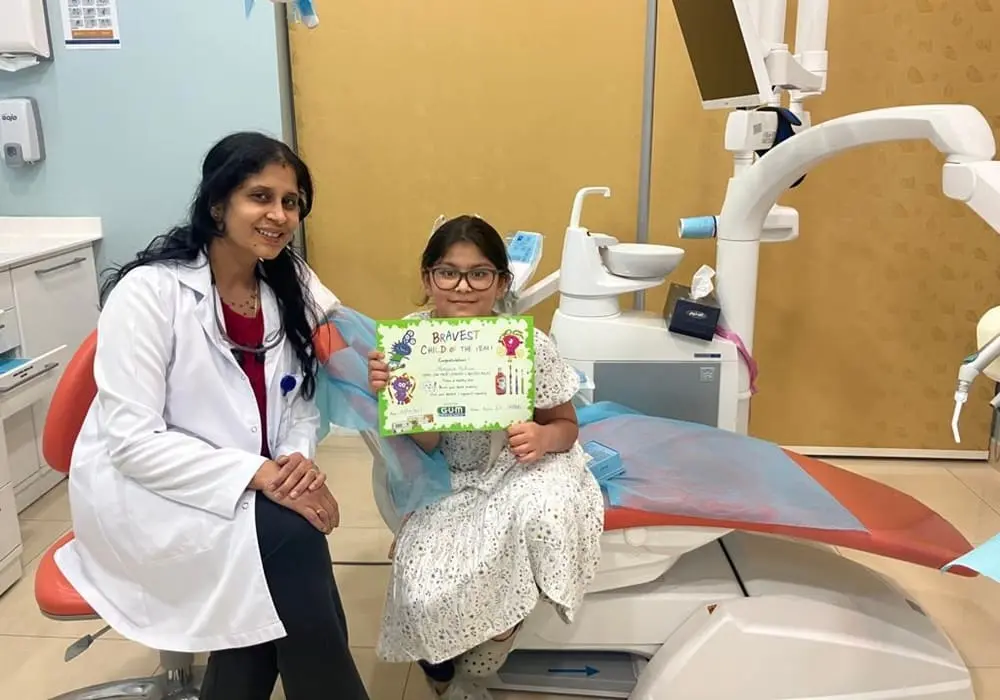
A positive dental experience will shape how a child feels. About oral care for years. For that reason. Our team will focus on clear communication. Gentle techniques and treatment. Suited to each child’s needs.
At Starry Smile Dental Clinic – Dubai. We assess the cavity. Explain the available filling options. Also help parents make an informed decision. We aim to protect the child’s tooth. While keeping the appointment as relaxed as possible.
Early action matters. When you notice a dark spot. Sensitivity or discomfort. Arrange a dental examination. Before the cavity becomes larger.
Yes. Dentists will use established restorative materials selected. According to the child’s tooth. Age and clinical needs. The dentist will explain the recommended material before treatment.
Some fillings will require local anaesthetic. While very small or shallow cavities will not. The dentist will decide based on the depth of decay. Also the child’s comfort.
Yes, white dental fillings are commonly used for suitable cavities in baby teeth. However, the final choice depends on the tooth’s location and the size of the damaged area.
Many straightforward fillings will take around 20 to 45 minutes. But treatment time will vary according to the number of teeth. Cavity depth and the child’s cooperation.
The dentist will take steps to reduce discomfort. This includes numbing the tooth when necessary. Children will feel pressure. Or vibration. But they should not feel sharp pain.
Very early enamel changes will sometimes be managed with fluoride. Dietary changes. Also close monitoring. But once a physical hole forms. The tooth will often need restorative treatment.
The decay will spread deeper. Leading to pain. Infection. Difficulty eating. Or the need for pulp treatment. A crown or extraction.
This will depend on the filling material. Also whether anaesthetic was used. Children should wait until numbness has disappeared. To avoid accidentally biting their cheek or tongue.
A filling will last for several years. Although its lifespan will depend on the material. Cavity size. Biting forces. Oral hygiene and dietary habits. No filling lasts forever.
Yes. New decay will form around the edge of a restoration. When plaque and sugar exposure will remain high. Daily cleaning and dental check-ups will be essential.
A filling will suit a small or moderate cavity. Likewise a badly weakened tooth will need a paediatric crown. For greater coverage and protection.
Use calm and positive language. Also avoid sharing frightening dental stories. Tell the child that the dentist will clean and repair the tooth. To help it feel strong again.
Comments are closed.


How to Make Dental Treatments Stress-Free for Children
[…] » How Dental Fillings Help Treat Cavities in Children? […]
Dental Fillings: Types, Benefits and When You Need One
[…] » How Dental Fillings Help Treat Cavities in Children […]