 +971 4 584 1014
 +971 58 684 1014
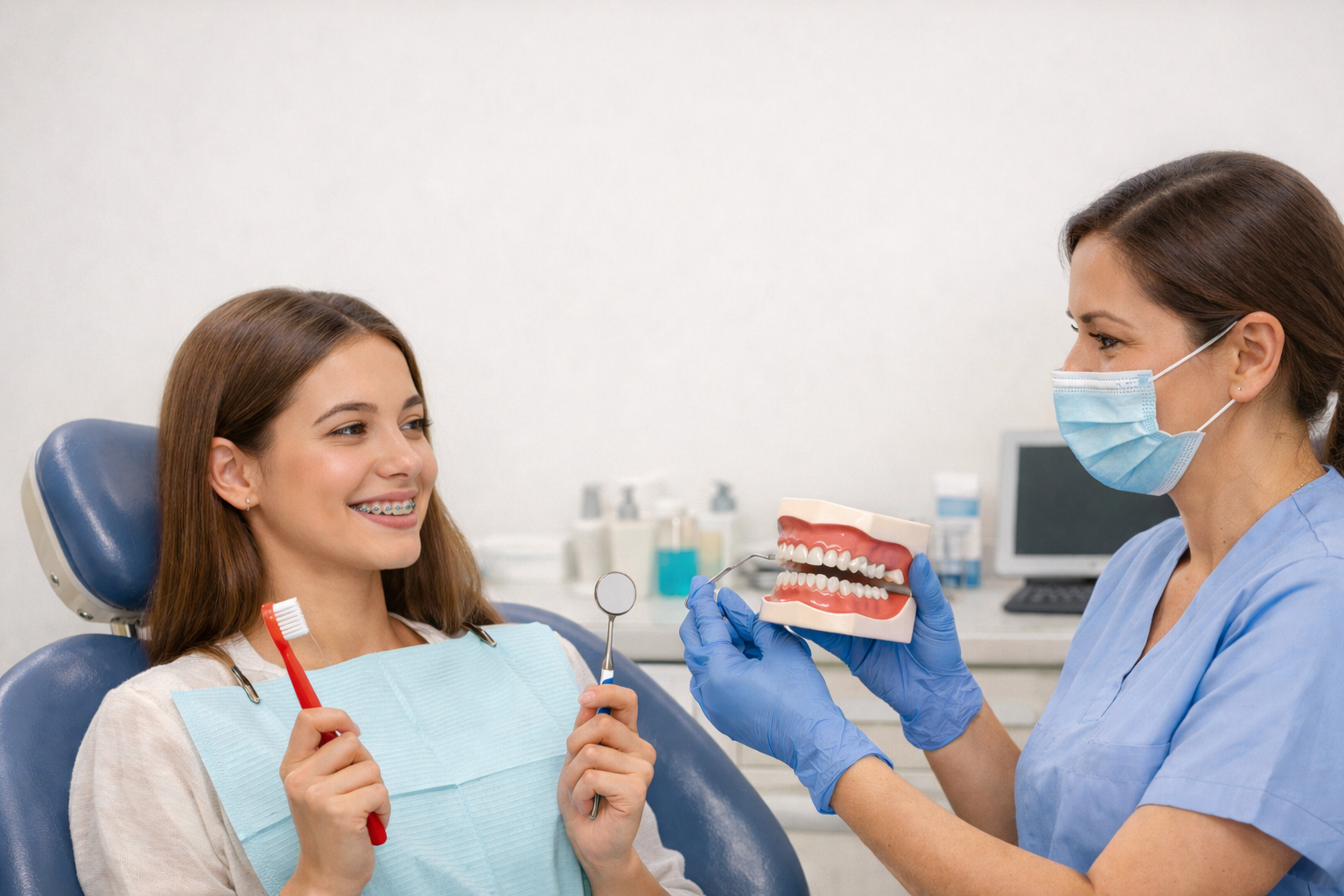
White spots that show up during braces are not “just stains.” In most cases, their early enamel damage is called demineralization. The good news is this: you can prevent most white spots during braces with the right routine, the right products, and a simple clinic follow-up plan. Even better, you don’t need complicated steps—just consistent ones.
Here at Starry Smile Dental Clinic – Dubai, we see this problem most often when plaque sits around brackets, especially near the gumline. So, let’s break down demineralization control in a clear, practical way—so your teeth finish straight and smooth.
White spots on teeth are dull, chalky white spots that tend to emerge when minerals in the enamel leave the surface of teeth. That’s when plaque bacteria munch on sugars, producing acids. Those acids leach calcium and phosphate from the surface layer of enamel. The enamel is porous and, over time, you see the white mark.
The tricky part is: the tooth may look “white,” but it’s actually weaker than the rest of the enamel. That’s why preventing demineralization is a big part of good orthodontic care. Looking for a Dental Clinic in Dubai?
Braces create more places for plaque to hide. Brackets, elastic ties, and wires trap food and make brushing harder. So, the plaque stays longer, acid stays longer, and the enamel suffers.
Common reasons white spot lesions develop during orthodontic treatment:
In Dubai, we also see higher risk in people who sip sweet drinks during long workdays, or teens who snack frequently between school and coaching classes. The lifestyle matters—so we plan for it. Get details on Clear Braces.
If you catch it early, you can reverse some damage. Look for:
If you notice any of these, don’t wait till braces come off. Demineralization control works best early.
Think of enamel as a wall made of minerals.
Your goal during braces is to keep the balance in favor of remineralization. And yes—this is possible with the right routine. Get details on Invisible Braces.
Don’t brush randomly. Follow zones:
If you have the option, a soft electric brush is ideal. If not, a gentle manual brush is still cool — just get more specific. Position the brush at a 45° angle toward the gum line, tilt the brush down to a 90° angle against the bracket and push straight across.
Best habit: Brush after breakfast and before bed, ideally after lunch too. If brushing after lunch is too difficult at the office or in school, rinse thoroughly and chew sugar-free gum (xylitol is best).
Fluoride protects enamel and helps it up repair. Opt for fluoride toothpaste, and don’t rinse vigorously immediately after brushing. Instead:
This small change alone helps reduce white spot lesions. Looking for a Dental Implants Clinic in Dubai?
Floss is great, but many people struggle with it during braces. So add an interdental brush:
Even 60 seconds daily makes a real difference.
A fluoride mouthwash can strengthen enamel, but only if used consistently.
Simple schedule:
If you use it immediately after brushing, you may wash away toothpaste fluoride too quickly. Timing helps.
Some patients benefit from products with calcium and phosphate support (often used for sensitive teeth and enamel strengthening). Not everyone needs it, but it can help in high-risk cases.
At Starry Smile, we often recommend this when:
You don’t have to be perfect. But you do need to be smart.
Even if you eat small sweets, if you eat them many times a day, enamel stays in acid mode. Instead of 6 snack moments, try 2 planned snack moments.
Sipping sweet drinks over hours is a high risk. If you drink coffee/tea with sugar:
This is a huge demineralization control win, honestly. Get details on Debonding of braces with Scaling and Polishing.
Home care is the base. But clinic prevention boosts results, especially for teens or busy adults.
Regular cleanings remove hardened plaque (tartar) that brushing can’t. This reduces bacteria load and inflammation. When gums calm down, brushing becomes easier too.
A fluoride varnish is painted on enamel to increase resistance to acid. It’s quick and helpful for high-risk patients, especially those who already show early spots.
Some patients benefit from protective resin coatings around brackets. These can act like a barrier. Your orthodontist/dentist will decide based on your enamel quality and risk.
Don’t treat braces visits like only “tighten and go.” Ask for a quick enamel check. When the team watches early changes, prevention becomes easier. Looking for a Orthodontic Treatment in Dubai?
Don’t panic. Some white spots improve after braces come off, especially if they are superficial. After debonding, we may recommend:
The key is: the earlier you act, the more predictable the improvement.
Related Articles:
» Things to Do Before Getting Braces
» Innovative Orthodontic Solutions: Braces and Invisalign
» The Process of Getting Braces: What to Expect?
» Orthodontic Solutions in Dubai: Straightening Teeth for a Confident Smile
» Benefits of Orthodontic Treatment in Dubai for Your Dental Health
Braces are an investment, so protect the finish. With the right brushing angles, fluoride habits, and diet timing, preventing white spots during braces becomes very realistic.
If you want, Starry Smile Dental Clinic – Dubai can help assess your risk, show you the exact brushing technique for your bracket type, and plan a prevention routine that matches your schedule (school, office, travel—anything).
The white spots occur when plaque acids remove minerals from the enamel around brackets. This is demineralization.
Some respond to remineralization after braces, but deeper stains may not without professional intervention.
Brush with fluoride toothpaste Use the interdental brush Snack less Go to a professional cleanings.
In some cases yes, as it is more consistent in cleaning around brackets. But a gentle manual brush will do if used properly.
Many braces patients benefit from daily fluoride mouthwash, used at the right time (not immediately after brushing).
Not really. Whitening can even highlight contrast. Focus on remineralization first.
They can, especially if you trap sugary drinks under aligners or skip cleaning. Risk is usually lower than fixed braces, but still possible.
Repeated consumption of sugary snacks, sticky foods and acid drinks can be at fault. And drinking sweet things over a long time can be a strong trigger too.
Yes. Water washes away acids and encourages saliva production, the body’s defense against erosive enamel loss.
Yes, fluoride varnish can strengthen enamel and reduces risk, particularly for patients already showing early changes.
Check for chalky, matte spots close to the gums and around brackets, as well as swelling or sensitivity of the gums.
Solutions might be fluoride therapy, remineralization agents, resin infiltration, microabrasion and sometimes whitening (if highly severe).
Comments are closed.


Braces vs Clear Aligners: Which Treatment Is Right for You?
[…] » Preventing White Spots During Braces: Demineralization Control […]