+971 4 584 1014
 +971 58 684 1014

Clear aligners have a reputation for being “easy orthodontics.” Pop them in, take them out, watch your smile straighten. And yes, for mild crowding or small gaps, aligners can feel pretty straightforward. However, when your bite is complicated—think deep bite, open bite, crossbite, or jaw-related shifts—the story changes a bit.
That’s exactly when attachments and elastics enter the chat.
At Starry Smile Dental Clinic – Dubai, we often meet patients who want aligners but worry their bite is “too hard” for clear trays. The truth is: many complex cases can be treated with aligners, but only when the plan includes smart biomechanics. In simple words, aligners sometimes need helpers. Those helpers are usually aligner attachments, rubber band elastics, and occasionally IPR (interproximal reduction) or refinements. And when they’re used correctly, they’re not scary—they’re just strategy. Looking for a Dental Clinic in Dubai?
A complex bite is not just crooked front teeth. It’s when the way your upper and lower teeth meet needs correction, not only alignment.
Here are common “complex bite” patterns:
So, while aligners can move teeth, complex bites often require controlled movements like rotation, intrusion, extrusion, or bodily movement (not just tipping). That’s why accessories matter. Get details on Invisalign Treatment in Dubai.
Aligners work by applying gentle pressure through the plastic tray. For basic movements, the tray grip is enough. Yet, in complex bites, the tray can slip slightly, or it may not apply the exact force needed to move roots and crowns together.
In other words: aligners can push, but sometimes they need something to “hold” or “pull” for better precision.
That’s where attachments and elastics become the game-changers.
Attachments are tiny tooth-coloured shapes made from dental composite (similar to a filling material).The aligner will grasp better and move more accurately when they are put on certain teeth.
Think of them like “handles” on the tooth. Without handles, the tray may slide. With handles, the tray grabs and moves the tooth more predictably.
Attachments are commonly used for:
They can be slightly visible up close, yes. However, they’re tooth-coloured and far less noticeable than braces. Most people in Dubai who wear aligners with attachments still look “natural” in meetings, photos, and daily life.
Also, once you get used to them, you’ll honestly forget they’re there.
They don’t “hurt” during placement. You may feel the pressure when you switch to a new aligner, though. That’s normal and usually settles within a day or two. Looking for a Orthodontic Treatment in Dubai?
If attachments are handles, elastics are the pulling power.
Elastics (rubber bands) connect upper and lower teeth using small hooks or buttons. Their job is to guide the jaw relationship and improve how your bite fits, not just how your teeth look.
Elastics are often prescribed for:
If your dentist says, “We need elastics,” it doesn’t mean your case is a failure. It means your case is advanced enough to need proper bite mechanics—which is actually a good sign that the planning is serious. Get details on Dental Bridges.
In many complex bite cases, we use attachments for tooth-level control and elastics for bite-level correction.
This combination helps aligners behave more like a full orthodontic system, while still staying clear, removable, and lifestyle-friendly.
However, it also means compliance matters a lot more.
If you want complex bite correction with aligners, you must wear them properly. There’s no shortcut, sorry.
For complex cases, most dentists recommend 20–22 hours/day wear time. That means you remove aligners only for meals, drinks (other than water), and brushing.
And if you’re prescribed elastics, you should wear them exactly as instructed—often full-time except meals.
If wear time drops, these things happen:
So if you’re thinking, “I’ll wear them mostly,” aligners may not be the right tool for a complex bite. But if you’re consistent, the results can be beautiful and stable. Get details on Clear Braces.
Here’s how a complex bite aligner journey usually goes:
We assess not only your smile, but your bite relationship, jaw function, and tooth wear patterns. Then we take a 3D scan (no messy impressions, thank god).
Complex cases require detailed staging. We arrange where attachments need to go on teeth, if elastics are needed, and how to move teeth without tipping them over..
If you need them, you’ll get trays, directions, and advice on how to wear elastic. We also check your bite carefully because even small errors matter in complex cases.
Refinements are not “bad news.” They’re often part of the plan, especially when bite correction is involved. Sometimes we do a mid-course adjustment to improve tracking.
After complex bite correction, retainers matter even more. Otherwise, teeth can shift back, especially with deep bites and open bites.
Related Articles:
» Invisalign Clear Aligners for Teens in Dubai
» Teeth Gaps can be Treated with Invisalign Clear Aligners
» Aligners for Teens: Compliance Hacks and Faster Results
» Aligners for Open Bite / Deep Bite: What’s Realistic?
» DIY Aligner Risks: Why Doctor-Supervised Treatment Matters?
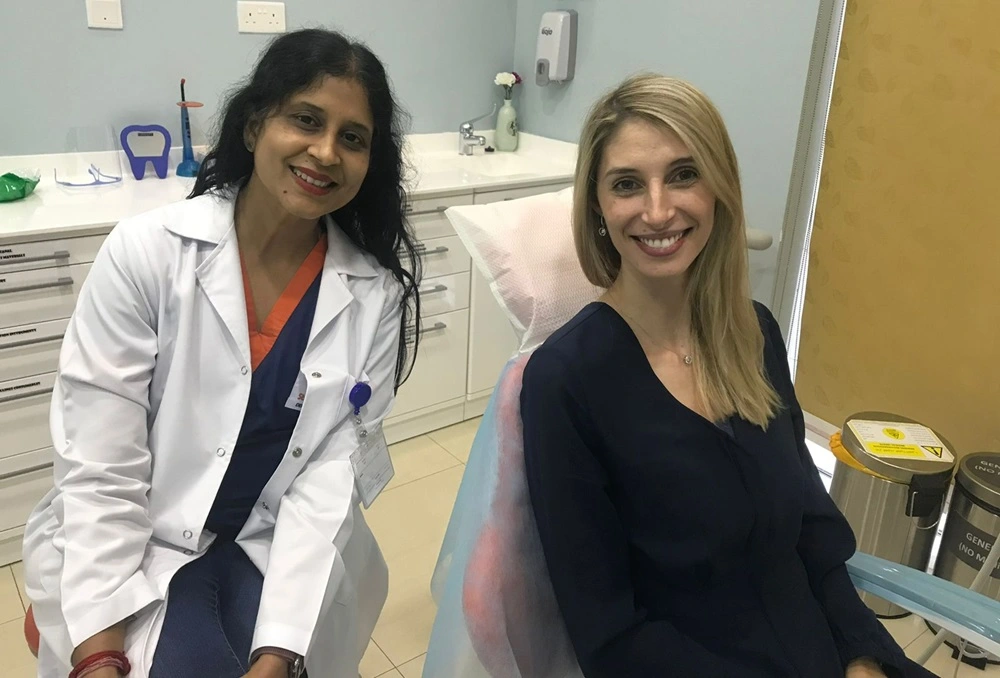
At Starry Smile Dental Clinic – Dubai, we combine modern clear aligner planning with bite-focused orthodontic approach. If your case needs attachments, elastics, or both, we’ll explain it clearly—no confusing dental language, and no pressure.
Schedule a meeting with us so we can make a plan that works for your bite, not just your photos.
Attachments assist aligners hold onto teeth and do more complicated movements like rotations, incursion, and root control.
No. They stay during treatment and are removed once aligner therapy is complete
Slightly, but they’re tooth-coloured. Most people won’t notice unless they’re looking closely.
Elastics help correct bite issues like overjet, underbite, crossbite, and open bite by guiding jaw-to-jaw positioning.
It depends on your plan, but often close to full-time. Consistency gives the best bite improvement.
No—usually they support treatment. Not wearing them can delay results.
Many deep bites improve with aligners, especially when attachments and staging are planned correctly.
Yes, in many cases. Open bite often needs smart movements and sometimes elastics.
That can mean tracking issues. Contact your dentist early—don’t just “wait it out.”
Possibly, and it’s common. Refinements help fine-tune tracking and bite settling.
You may feel pressure when changing trays or starting elastics, but it’s usually mild and temporary.
Follow the instructions for wearing your retainers. Retainers are very important to stop recurrence, especially in cases with deep and open bites.